The one question that changed how I see my kitchen
Can I be honest with you for a second?
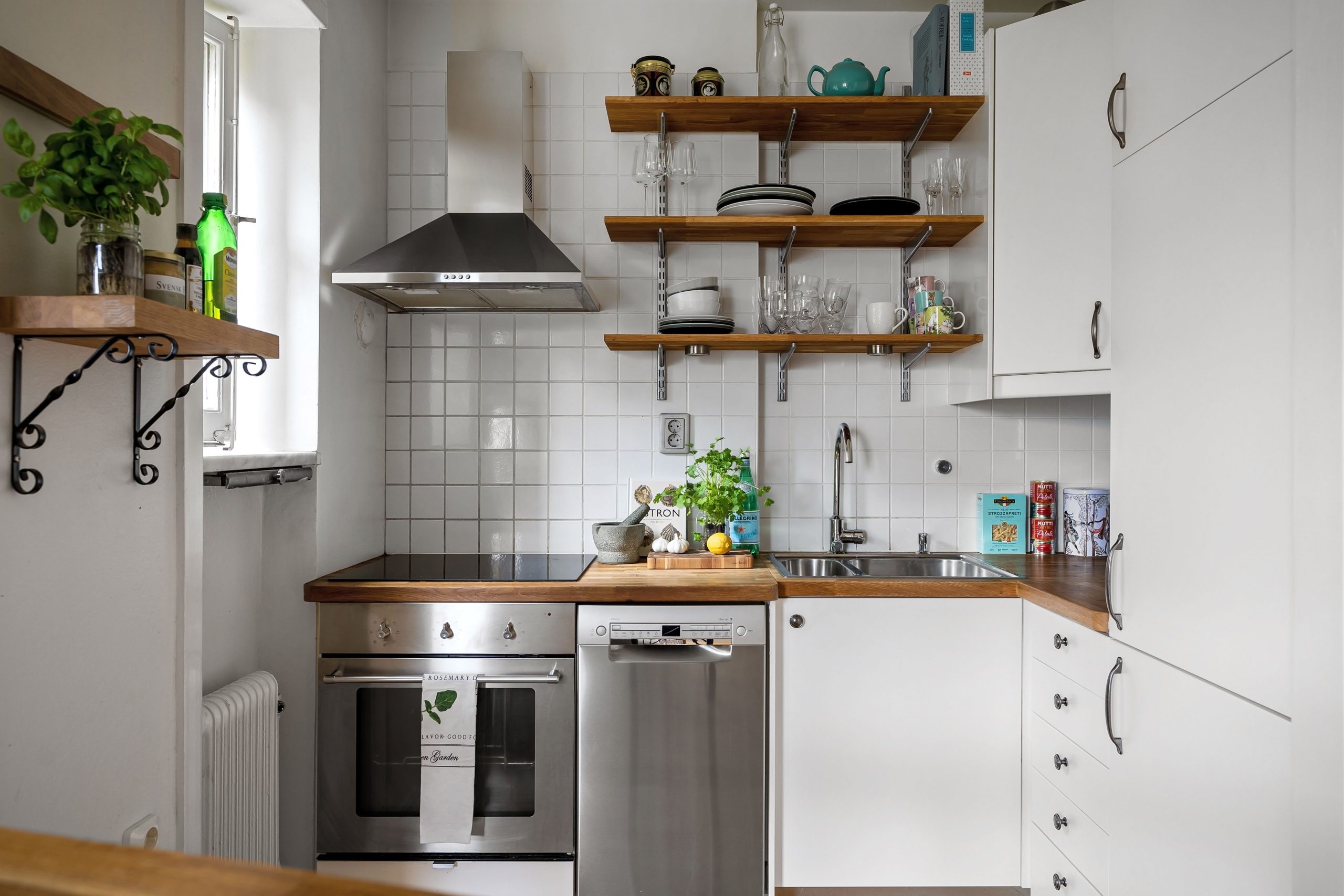
I used to dread cooking. Not because I hated cooking—I actually love it. But every time I walked into my tiny kitchen, something shifted. My shoulders tensed. My brain started calculating: Where am I going to put the cutting board? Why is there a stack of Tupperware lids on the stove? Did I really need three spatulas?
It wasn’t the cooking that exhausted me. It was the managing.
If you’re reading this, you probably know exactly what I mean. You’ve got a small kitchen. Maybe it’s a galley. Maybe it’s a corner of a studio apartment. Maybe it’s technically a “kitchen” but really just a wall with a sink and a stove.


And you’ve tried the Pinterest hacks. The matching jars. The drawer dividers. Some of them worked. Some of them just moved the chaos around.
Here’s what I’ve learned after years of living small: The best small kitchen storage ideas aren’t about buying more containers. They’re about using the space you already have—differently.
Let me show you what I mean.
The First Step Nobody Wants to Take (But You Have To)
I know. You want the clever hacks. The magnetic spice racks. The pull-out drawers. The satisfying before-and-after.
But here’s the truth: You cannot organize clutter. You can only rearrange it.
Professional organizer Cornelia from The Professional Organiser puts it simply: “It’s about finding a home for everything to create an environment that brings calm” .
Before you buy a single bin or shelf, you need to know what you’re actually working with.
The frequency filter. Take everything out of one cabinet—just one. Now ask:
- Do I use this every day?
- Do I use this every week?
- Do I use this a few times a year?
- Why do I even have this?
Daily items deserve prime real estate—the shelf at eye level, the drawer closest to where you cook. Weekly items can go slightly higher or lower. The waffle maker you use twice a year? It doesn’t get to live next to the stove .
The duplicate problem. Three spatulas. Six mugs you never use. Two vegetable peelers. Redundancy feels safe, but in a small kitchen, it’s just clutter wearing a disguise .
Once you’ve cleared the excess, you’ll be shocked at how much space you actually have.
The Rule That Changes Everything: Go Up, Not Out
In a small kitchen, your walls are your best real estate.
Floor space is precious. Counter space is sacred. But vertical space? Most people waste it entirely .
Extend cabinets to the ceiling. That dusty gap between your upper cabinets and the ceiling? It’s prime storage for things you don’t use often—large serving bowls, holiday platters, the Instant Pot you pull out twice a year. If you can’t extend your cabinets, use that space for baskets or bins that hold rarely-used items .
Hang things under your cabinets. Paper towels. Mugs. Small baskets for dishcloths. A slim rail with S-hooks for utensils. These tiny additions turn dead space into daily-use storage .
Use the sides of your fridge. Magnetic spice racks, magnetic knife strips, magnetic hooks for pot holders. Your fridge is a giant metal storage opportunity that most people ignore .
Mount a rail on the wall. A simple kitchen rail with hooks can hold utensils, mugs, even small pans. It keeps things within arm’s reach while freeing up drawers and counter space .
The Secret Spaces You’re Probably Ignoring
Every small kitchen has hidden storage. You just have to know where to look.
The gap beside your fridge. That two-inch space between the fridge and the wall or cabinet? It’s not wasted—it’s waiting. A slim pull-out shelf or a rolling cart can turn it into a spice rack, a cutting board holder, or a mini pantry .
The back of your cabinet doors. Install slim racks or pocket organizers on the inside of cabinet doors. Spice packets. Cleaning brushes. Plastic wrap. Things that normally clutter your drawers can live invisibly on the door .
Under the sink. This is the most neglected zone in small kitchens. A tiered organizer or a simple shelf riser can double your storage. Keep cleaning supplies on the bottom, sponges and dish soap on top .
The toe-kick. That recessed space at the bottom of your cabinets—the one you kick accidentally—can actually hold a shallow drawer for baking trays, foil, or flat items. It’s not a DIY for everyone, but it’s worth knowing about .
Task Zones: The Organizing Principle That Actually Makes Sense
Most people organize their kitchens by category. All the spices together. All the Tupperware together. All the utensils together.
That works—until you’re cooking and have to walk across the kitchen for the salt you already grabbed, the cutting board you left in a drawer, the spatula that lives three cabinets away from the stove.
Organize by task instead.
The prep zone: Cutting boards, knives, mixing bowls, the spices you use most. All within arm’s reach of your main workspace .
The cooking zone: Pots, pans, cooking utensils, oils. Near the stove. If you’re constantly walking to the other side of the kitchen for a spatula, your setup is fighting you .
The cleaning zone: Dish soap, sponges, trash bags, dishwasher tabs. Near the sink .
The food storage zone: Containers, wraps, foil, bags. Together. Not scattered across three drawers .
When things live where you actually use them, cooking stops feeling like a scavenger hunt.
The Storage Solutions That Earn Their Keep
Not every organizer is worth your money. These are the ones that actually work in small spaces.
Drawer dividers—but the good ones. Cheap plastic bins slide around and frustrate you. Bamboo, wood, or acrylic dividers sized to your exact drawers are worth the investment. They keep utensils, measuring spoons, and the junk drawer from becoming a black hole .
Lazy Susans for corners. Deep corner cabinets are where things go to die. A lazy Susan brings everything to the front. Use them for oils, condiments, spices—anything you need to grab quickly .
Tiered organizers for cabinets. A simple shelf riser can double the usable space in a cabinet. Cans, jars, and bottles become visible instead of stacked and forgotten .
Pull-out drawers for deep cabinets. If you have base cabinets with shelves, a pull-out drawer is a game-changer. You stop losing things in the back and stop knocking over everything in front to reach them .
Under-shelf baskets. These hook onto your existing shelves and create instant storage below. Perfect for produce, dishcloths, or anything that needs a home but doesn’t deserve a full shelf .
The “Drop Zone” Drawer (Yes, You Need One)
I used to fight the junk drawer. I tried to eliminate it. I failed.
Then I realized: the junk drawer isn’t the problem. The problem is when junk spreads beyond the drawer.
Designate one drawer near the entry point of your kitchen—the place where you actually walk in—as the drop zone. Mail. Keys. Receipts. The random things that find their way into your kitchen. Give them a home. Then revisit it every few weeks so it doesn’t overflow .
The goal isn’t zero clutter. The goal is contained clutter.
The Bottom Line
Small kitchen storage ideas don’t have to be complicated, expensive, or permanent.
The most powerful thing you can do is use the space you already have—differently. Go vertical. Find the secret gaps. Organize by task, not category. Give everything a home that makes sense for how you actually live.
Your kitchen doesn’t need to look like a showroom. It needs to work for you. It needs to feel calm when you walk in. It needs to support the way you cook, not fight against it.
Start with one cabinet. One drawer. One small change.
You deserve a kitchen that feels like a deep exhale, not a daily battle.
Frequently Asked Questions
Q: How can I maximize storage in a small kitchen without spending much money?
A: Start by decluttering what you don’t use. Then use what you have: shoe boxes as drawer dividers, jars for dry goods, hooks on the wall. The best storage solutions are often free or nearly free .
Q: What is the best way to organize a small kitchen?
A: Organize by task zones—prep, cooking, cleaning, storage—not by category. Keep items close to where you use them. Daily items get prime real estate; rarely-used items go high or in awkward corners .
Q: How do I store things in a small kitchen with no cabinets?
A: Go vertical. Use wall-mounted rails, magnetic strips on the fridge, floating shelves, and over-the-door organizers. Your walls can hold more than you think .
Q: What should I do with the space above my kitchen cabinets?
A: Use it for rarely-used items—large serving dishes, holiday platters, seasonal appliances. Baskets or bins keep it looking tidy. Don’t store anything you need daily up there .
Q: How do I organize a small kitchen on a budget?
A: Skip the matching containers. Use what you have. Adjust your cabinet shelves to different heights. Repurpose boxes and jars. Focus on function, not aesthetics .
Q: What is the best storage for small kitchen countertops?
A: Keep them as clear as possible. Use a tiered spice rack, a slim utensil holder, and a magnetic strip for knives. Everything else should have a home behind a cabinet door .
Q: How do I stop my small kitchen from feeling cluttered?
A: Clear your countertops daily. Use closed storage more than open shelves. Keep colors cohesive. And remember: clutter isn’t about too many things—it’s about things without homes .
Save This Page for Later…
To your Small Kitchen Storage or Kitchen Organization board. And share it with someone who’s tired of playing Tetris with their Tupperware.