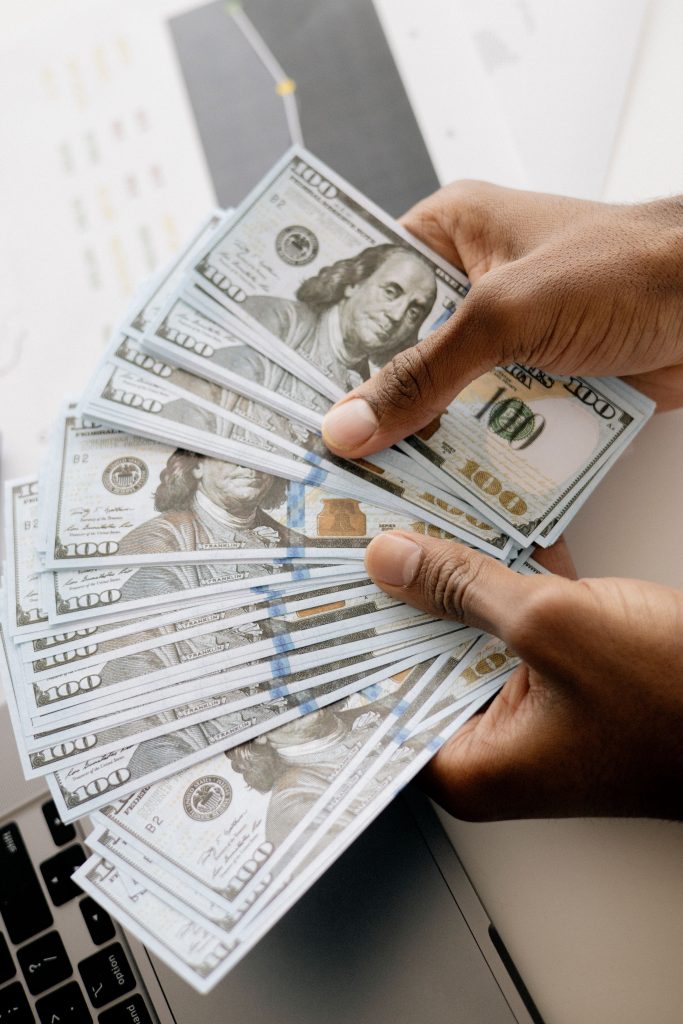
Have I ever looked at my bank balance and wondered, “Where did all my money go?”
The frustrating part is that I was not buying expensive cars, designer clothes, or taking luxury vacations.
It was the little things.
A drink because I was thirsty. Another kitchen gadget because it looked useful. Takeout because I was too tired to cook. A “good deal” on something I had not planned to buy.
None of these purchases felt serious at the time. But when I added them up, I realized something uncomfortable: some of my money was disappearing through purchases I barely remembered making.


So I started paying closer attention.
Instead of asking myself only, “How can I make more money?” I began asking, “What can I stop buying?”
That question changed the way I spend.
Here are 15 things I stopped buying to save money. Some were surprisingly easy to eliminate, while others required me to break habits I had considered completely normal.
1. Bottled Water When I Could Carry My Own
I used to buy bottled water whenever I was outside.
One bottle did not seem expensive. That was the problem.
Small purchases rarely feel expensive individually. The cost becomes noticeable only after they have repeated themselves dozens of times.
Now, whenever practical, I carry a reusable bottle when I leave home.
It is a simple change, but it removes one of those unnecessary “I’m already outside, so I’ll just buy it” purchases.
Money-saving rule: If I can carry something from home, I try not to buy it outside.
2. Snacks I Bought Because I Was Hungry
This one exposed a habit I did not realize I had.
I was not always buying snacks because I really wanted them. Sometimes I was simply hungry and unprepared.
That meant grabbing biscuits, pastries, chips, sweets, or whatever was conveniently available.
The solution was not complicated.
I started keeping simple snacks at home and taking something with me when I knew I would be away for several hours.
Planning a snack is cheaper than repeatedly making an emergency purchase.
And there is another benefit: I am less likely to buy something simply because I am hungry.
3. Takeout When I Already Had Food at Home
There is a difference between wanting a particular meal and ordering food because I cannot be bothered to prepare anything.
I started noticing how often I was doing the second one.
There might already be rice, pasta, beans, vegetables, chicken, or leftovers in the kitchen, yet I would still consider ordering something.
Now I check my kitchen before spending money on prepared food.
Sometimes the better question is not:
“Do I want takeout?”
It is:
“What food do I already have that I can turn into a decent meal?”
That little pause has saved me more money than I expected.
4. Clothes I Had No Immediate Need For
A sale can make an unnecessary purchase feel responsible.
“Look at how much I saved.”
But if I spent money on something I did not need, I did not really save money.
I simply spent less than I could have spent.
I stopped buying clothes just because they were discounted, attractive, or different from what I already owned.
Before buying something, I now ask:
- Do I need this?
- Do I already own something similar?
- How often will I realistically wear it?
- Can I create at least three outfits with it?
- Would I still want it if it were full price?
That last question is particularly useful when a sale is creating artificial urgency.
5. Cheap Items That I Knew Would Not Last
Cheap does not always mean economical.
I have bought inexpensive items only to replace them a few months later.
The purchase looked cheap at the beginning. The replacement made it expensive.
So I became more careful with things I use frequently.
For certain products, I would rather buy one reasonably durable item than repeatedly buy the cheapest version available.
This does not mean buying the most expensive option.
It means considering cost per use, not just the price on the label.
If I use something every week for several years, durability matters.
6. Random Home Decor
This was difficult for me because home decor can make a space feel completely different.
A cushion here.
A wall decoration there.
Another container.
Another small decorative item.
The problem is that small home purchases can accumulate quietly.
I stopped buying decor simply because I liked it.
Now I ask where it will go before I buy it.
If I cannot immediately identify its place in my home, it probably does not need to come home with me.
This has also helped reduce clutter.
Saving money and having a less crowded home turned out to be two benefits from the same decision.
7. Kitchen Gadgets I Would Probably Use Twice
Some kitchen gadgets look like they will transform your life.
Until they end up inside a cupboard.
I stopped buying single-purpose kitchen gadgets unless I had a specific, regular use for them.
Before buying one, I ask:
What problem does this solve that my existing kitchen tools cannot solve?
If the answer is “not much,” I leave it.
A kitchen does not become more efficient simply because it contains more equipment.
Sometimes fewer tools actually make cooking easier.
8. Drinks I Could Make at Home
Coffee, tea, smoothies, flavored drinks, soft drinks and other beverages can become surprisingly expensive when purchased repeatedly.
The issue is rarely one drink.
It is the pattern.
One today.
Another tomorrow.
A few more during the week.
I began making more of my everyday drinks at home.
I still enjoy buying a drink occasionally, but it became a choice rather than an automatic part of my routine.
That distinction matters.
9. Impulse Purchases Because Something Was “On Sale”
This was one of the biggest mindset changes for me.
A discount does not automatically make something affordable.
If I spend $20 on something I never intended to buy, I am still $20 poorer.
I stopped treating sales as opportunities that I had to take advantage of.
Now I put more emphasis on my shopping list than the discount sign.
If I need the item, a discount is useful.
If I do not need it, the discount is often irrelevant.
A lower price is not a saving if the purchase itself was unnecessary.
10. Duplicate Household Items
Before buying something for the house, I started checking whether I already owned it.
This sounds obvious.
It is surprisingly easy to forget what is hiding in cupboards, drawers, storage boxes and the back of a wardrobe.
I have found that I already had:
- cleaning supplies
- storage containers
- extension cords
- notebooks
- kitchen utensils
- toiletries
- stationery
- spare household items
Instead of buying another one, I started using what I already had.
A quick inventory can sometimes save more money than another shopping trip.
11. Subscription Services I Barely Used
Subscriptions are dangerous because they are easy to forget.
A small monthly payment may not attract much attention.
But several small subscriptions can quietly become a significant annual expense.
I started checking recurring payments and asking:
Did I actually use this enough to justify paying for it?
If the answer was no, I cancelled it.
I also became more careful about free trials.
A free trial is not really free if I forget to cancel it and continue paying for months.
12. Beauty and Personal-Care Products Before Finishing What I Had
There is always another product promising better skin, better hair, better results or a better routine.
But I realized I often had perfectly usable products at home.
So I started finishing what I already owned before buying replacements.
This became my personal “use it up first” rule.
There is something satisfying about opening a cupboard and seeing fewer half-used products.
It also makes it easier to know what I actually need.
13. Notebooks, Pens and Stationery I Did Not Need
This one might sound strangely specific, but stationery can become a sneaky spending category.
A beautiful notebook can make me feel productive before I have actually done anything productive.
I stopped buying notebooks simply because I liked their covers.
I started using the notebooks I already had.
The same applies to pens, planners, folders and other office supplies.
Buying another planner will not magically make me organized.
Using the one already sitting on my desk might.
14. Things I Could Borrow or Rent for Occasional Use
I stopped automatically buying things that I would use once or twice.
For some items, borrowing makes more sense.
If something is expensive, takes up storage space, and will probably sit unused afterward, buying it may not be the smartest option.
Depending on the item and circumstances, I consider:
- borrowing from family or friends
- renting
- sharing
- buying secondhand
- using an existing alternative
The goal is not to avoid owning useful things.
It is to avoid paying for ownership when I only need temporary access.
15. “Just Because” Purchases
This may be the biggest category of all.
I stopped buying things simply because I felt like buying something.
Sometimes shopping is not about the item.
It is about boredom.
Stress.
Celebration.
Frustration.
FOMO.
Or simply wanting something new.
I started giving myself a little space between wanting something and purchasing it.
For inexpensive things, I might wait a day.
For more expensive purchases, I wait longer.
Quite often, the desire disappears.
And when it does not, I can make the purchase knowing that I actually considered it.
What Happened When I Stopped Buying These Things?
The biggest change was not that I suddenly became extremely frugal.
It was that I became more conscious of where my money was going.
I stopped thinking about saving money as simply finding the cheapest possible option.
Instead, I started looking at the gap between what I want and what I actually need.
That distinction helped me in several ways.
I wasted less food
Checking what I already had before shopping made it easier to use ingredients before buying more.
I accumulated less clutter
Not buying every attractive household item meant fewer things competing for space.
I made fewer emotional purchases
Waiting before buying helped me separate temporary feelings from genuine needs.
I became more intentional with shopping
Shopping became something I planned rather than something I automatically did whenever I had money available.
I started noticing my real spending triggers
This may have been the most valuable part.
I realized that some purchases were not about the products at all.
They were about convenience.
When I was tired, I spent more.
When I was hungry, I spent more.
When I was bored, I browsed.
When something was discounted, I felt pressure to buy it.
Once I recognized those patterns, changing them became much easier.
You Do Not Have to Stop Buying Everything
Saving money does not mean turning every purchase into a battle.
I still buy things I enjoy.
I still spend money on convenience sometimes.
I still treat myself.
The difference is that I want my spending to reflect my priorities instead of my impulses.
That is why I do not recommend copying someone else’s “no-buy list” blindly.
Look at your own bank statement.
Look at the things you repeatedly purchase.
Look at the purchases you barely remember making.
Then ask:
Which five things could I stop buying for the next 30 days without making my life miserable?
Start there.
You do not need to eliminate every small pleasure.
You need to identify the spending that gives you very little value in return.
A Simple 30-Day Challenge
If I wanted to reset my spending habits, I would start with a 30-day experiment.
For the next month:
- Stop buying one category of unnecessary items.
- Use what you already have at home.
- Carry water and snacks when practical.
- Check the kitchen before ordering food.
- Wait before making non-essential purchases.
- Review recurring subscriptions.
- Write down every impulse purchase you avoid.
- At the end of the month, calculate what you actually saved.
Do not worry about making the number impressive.
Even a modest amount matters when the habit can be repeated month after month.
The real goal is to prove something to yourself:
I can control more of my spending than I thought.
And once that becomes a habit, saving money becomes less about deprivation and more about making deliberate choices with the money I already have.